Sunday, July 17, 2011

Update July 2011

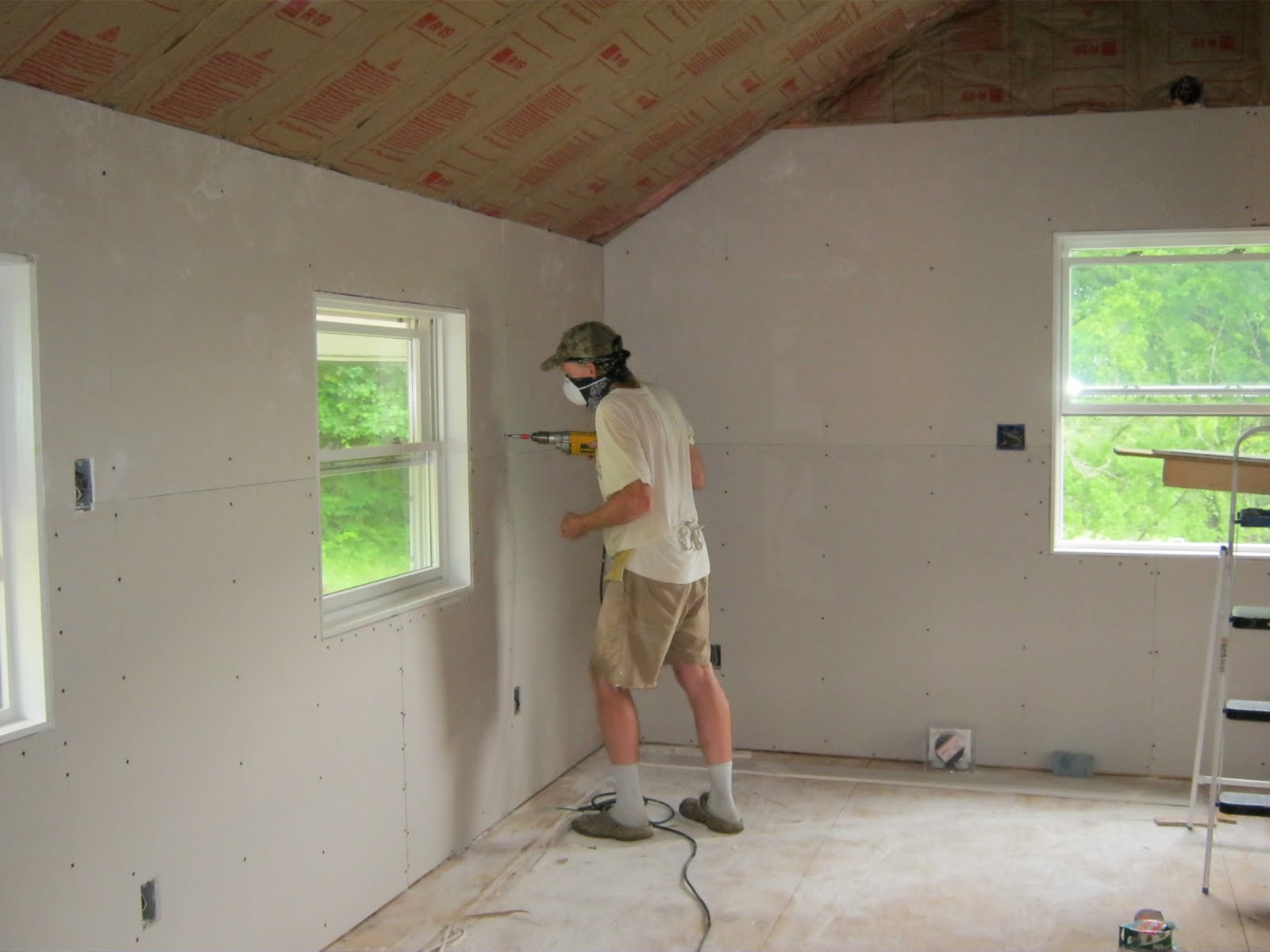
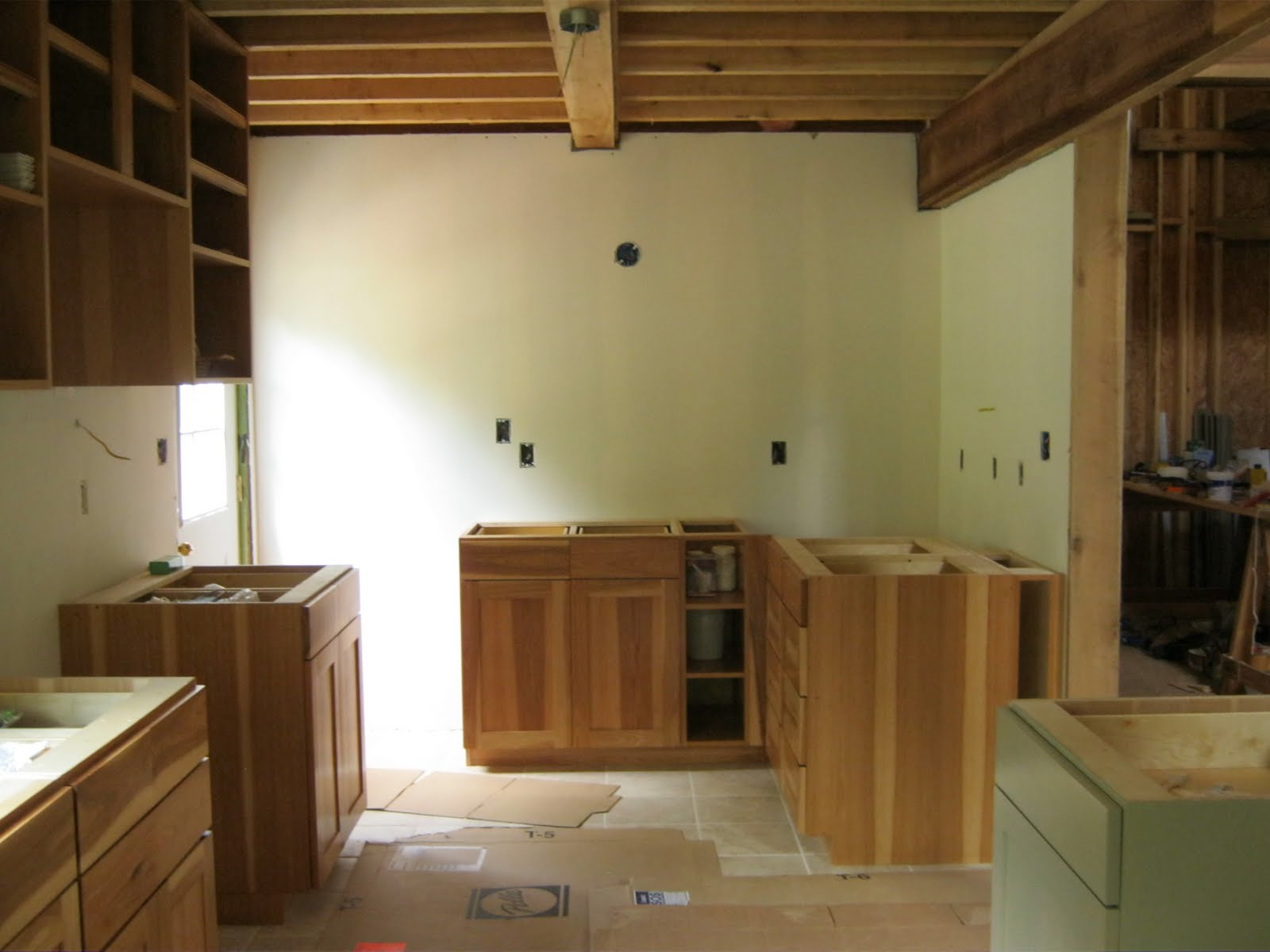
Its the dog days of summer in Tennessee.  We take a dip in the creek 2 or 3 times a day to cool off.  Randy has finished the drywall and put the primer paint on.  We have bought the tile for the bathroom and have put down the cement board.  These pictures show our progress.


Looking into the bathroom from the livingroom.


The livingroom.  The entry to the kitchen at left is blocked off with plastic to keep dust out of the kitchen.


Below is a shot from the garden showing an asparagus spear behind a marigold plant.  The spear is about the size of my little finger.  We will be feasting on asparagus next spring!


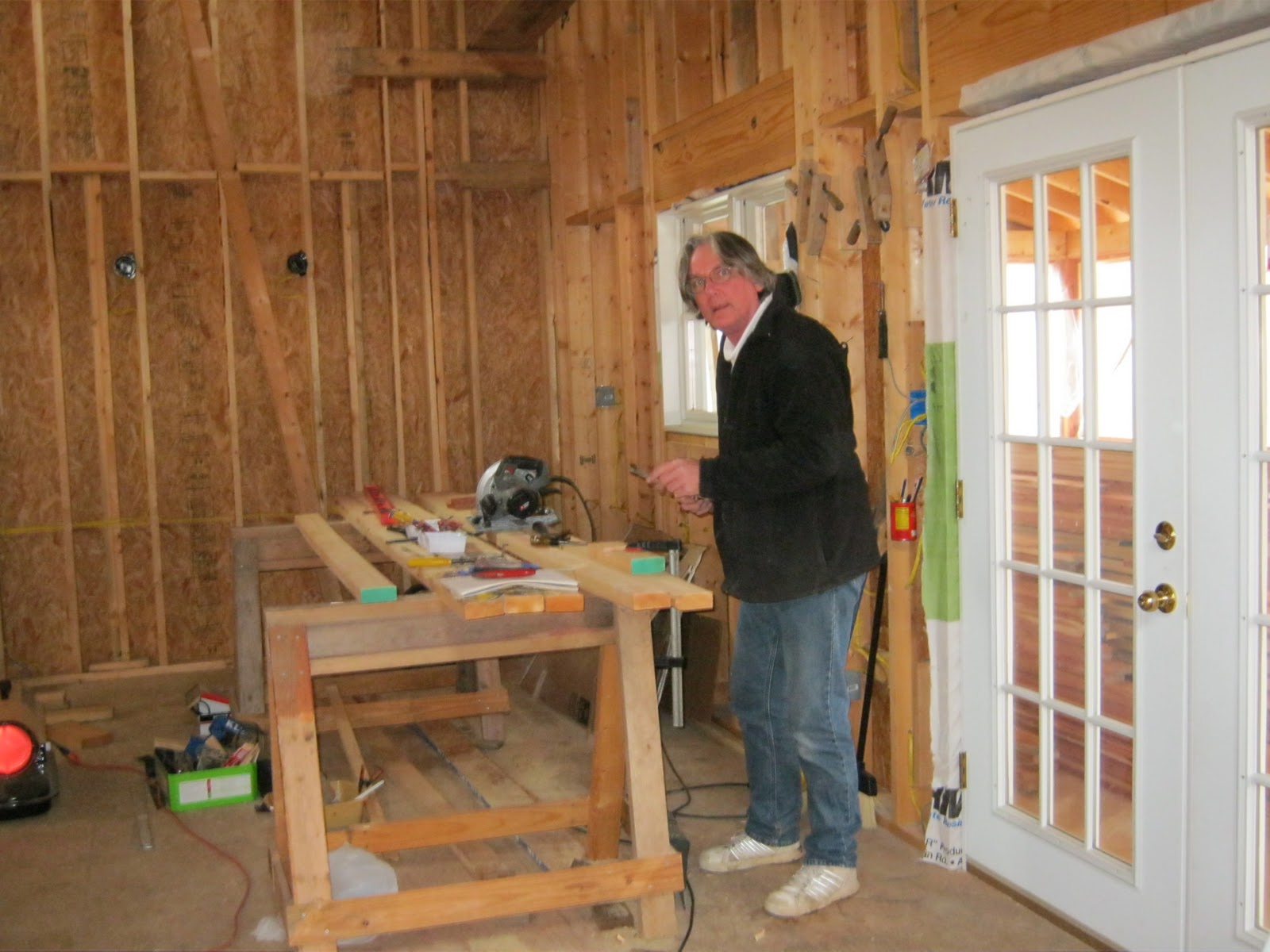
We are also building a 10 ft x 20 ft workshop behind the house using mostly materials salvaged from the shed we were living in at the time of the flood, plus some materials from the old church.  This picture shows the workshop now.  It will eventually have wooden siding and a lean-to in the back and on the east side for storage of firewood and other materials.  There are two large clerestory windows on the upper back wall for light, as shown in the second picture. 


This is a view through the west door.


Wednesday, June 29, 2011

Fungi

During the past few months we have purchased (from Fungi Perfecti) 200 inoculated dowels for each of three different kinds of mushrooms.  We have Shiitaki, Lion's Mane and Pearl Oyster.  The birch dowels, also called plug spawn,  have mycelium growing in them.  You drill holes in logs and insert the dowels, then keep the logs moist for about a year while mycelium eventually grow throughout the logs.  At some point, usually after a rainy spell, the mushrooms sprout on the logs and you can pick them.  The logs are supposed to provide mushrooms for several years.

We have 18 logs in all and they are stored in the woods behind our house.  The black tub is for soaking the logs if we have a dry spell.  The red dots are where the dowels were inserted into the logs, then covered with red cheese wax.  The wax keeps foreign fungi out and keeps the dowels moist.


The next picture shows the red wax melting in our solar oven.  If the oven looks a little beat up it is because it floated about 1/2 mile down the creek during the flood last year and was recovered from our neighbor's property.  We straightened out the reflectors and bought a new glass top.  It works fine now.  We had this solar oven on the deck of our sailboat!

Saturday, June 25, 2011

Drywall is up

Randy has started to paint the exterior of the house and all of the upper parts requiring scaffolding are now finished.  Our friends, Tim and Darrell, have also finished insulating the walls and hanging the drywall.  It is beginning to look like a house inside and out.


The next picture is a view from the upstairs balcony (off the bedroom) looking across the driveway down to the creek.  The little white spots between the driveway and the creek are where we have planted seedling trees.  They include white pine, willow oak, pawpaw, tulip poplar, winged elm, heartnut and many others.


The next picture shows the hardy kiwis.  There are four females and one male.  Eventually we will build a sturdy arbor for them to climb on, as they can be very vigorous and heavy vines.  Surrounding the kiwis are sorrel and chicory.  They are both dynamic accumulators and tasty greens for the salad.


This is a closeup of the east porch with our new deck furniture.  We enjoy spending evenings on the deck with our two cats, Roscoe (age 19) and Tigerboy (age 15).


Below is the blueberry patch.  On the right side I have planted five beds of flowers, including blue wild indigo (a nitrogen fixer), red bergamot (also called bee balm), which is a great hummingbird nectar flower and a tea plant, boneset, which has daisy-like white flowers and is a medicinal plant, wormwood, which repels certain pests, and more sorrel and chicory.   


These are the grape vines.  They are growing well and two have almost reached the top wire (at 6 feet).  When they reach a few inches above the top wire, I will snip off the top and train four lateral branches along the two wires.  

Monday, June 20, 2011

The annual garden

We didn't have much time this year to build up our annual garden area, but we did manage to put in a few crops and we worked on improving the soil.  Last year we prepared three beds by covering the grass with cardboard and adding soil and lots of horse manure in a frame of logs.  Those beds are very rich with loose soil now and were planted in garlic (softneck and elephant) last fall, then potatoes and lettuce this spring.  Here is a picture of half of our garlic crop that I am setting out to dry.


Last fall we had Ernest Connor, who did some of the excavation for our house, use his back hoe to loosen the soil in another area for additional garden space.  Our soil is very compacted and we thought this procedure might break up the hardpan about two feet down.  After Ernest loosened it up, we formed 7 more garden beds with paths in between, and added manure and organic nutrients.  These beds sat over winter and we planted them earlier this spring.  The organic nutrients consisted of 4 parts soy meal (for nitrogen), 1 part rock phosphate, 1/4 part each of agricultural lime and gypsum and 1/2 part dolomitic lime.  This is a formula I read about in Steve Solomon's book "Gardening When it Counts".

I got really excited about asparagus and ordered 100 crowns (50 Purple Passion, which is an all male variety, and 50 Jersey Giants).  The asparagus took up 4 of the 7 new beds!  It is doing really well, putting up lots of shoots, with some almost large enough to harvest.  However, I am not harvesting any until next year, to let strong roots develop.  In the other beds, we planted sugar snap peas, Swiss chard, rattlesnake beans, scarlet runners, and lots of peppers.  Here are some pictures.  Note the bluebird box with Dad on top with nesting material in his mouth.  They already have two kids this year and seem to be going for another round.  The bluebird family keeps watch over the garden.

The blue barrel collects overflow water from our spring and we use it to irrigate the garden.  In the middle picture you can see the compost piles in the background (framed by pallets).  After harvesting the garlic, dill, basil and cucumbers were planted in its place.


Friday, May 6, 2011

First anniversary of the big flood

On May 2 one year ago our plans were changed dramatically by a 500 year flood that washed across our property.  By early June we were planning our new house and beginning excavation work.  Now, on this first anniversary, this is where we are.


The outside of the house is finished except for painting.  The trim is local red cedar and the paint will be a steel blue and a sage green, to blend in with the forest.  Inside, we focused on the kitchen first as we had already hired a neighbor, Don Wagner, to build the cabinets.  We put in the insulation and Randy hung and finished the drywall and put on the primer.


Next, we tiled and grouted the kitchen floor and Don installed the cabinets.  They are hickory with a slightly darker than natural stain.  The two cabinets by the oven are a sage green wash.  Everything came out really nice.


Above, the sink will be centered below the large window and below, the fridge goes in the open spot.


Now, we start insulating and putting up drywall in the rest of the house and Don will start building the bathroom cabinets!

Outside, our forest garden plants are thriving.  Here are pictures of one of the hardy kiwi vines and one of the bush cherries.  Everything looks beautiful in the spring!


Friday, April 15, 2011

Progress on the Forest Garden

It has been a long time since I have written about the forest garden.  Of course, we have been busy building our house, but late winter/early spring is the time for planting bare root trees, so we have been working on planting as well this past month or so.  These pictures show a more-or-less scale drawing of our property near the house site.  This first picture shows the relative placement of Hurricane Creek Road, Hurricane Creek, the driveway and the house (rectangular box where the driveway ends near the bottom of the map).  The green hatched areas are forested and the contours are shown (the house is at 600 ft and the adjacent contours are every 20 ft elevation).  Note that the house faces north and is on a north facing slope.  A north facing slope is ideal for fruiting trees and bushes in this area, because trees exposed to full sun too early in the season will bloom out, only to have their blossoms killed very often by a late frost.  We used the solar pathfinder to position fruit trees most vulnerable to early bloom near the forest edge, so that they would be shaded until late April or early May. The north facing slope made the house design more difficult for passive solar heating in winter; however, the house is far enough down the hill from the forest that we still get a lot of sun on the "back" side of the house in winter.


The next picture is a closeup of some of our forest garden trees and bushes close to the house.  Note that the floodwaters last May came up to about where the lower part of the driveway is.  The garden was not flooded, but it came close.  Starting behind the house are 5 "Heritage" red raspberry bushes (R), three "Nanking" bush cherries (bc), four female and one male hardy kiwi vines (K), two Asian and one European pear trees (P) and three "Briana" apricots.  West of the raspberries are three apple trees (app), including one Hubbardston Nonsuch, one Paducah and one Arkansas Black, and three "Precocious" hazelnuts (Haz).  Downhill of the house are 8 grape vines (Gr).  There are 8 different varieties, but all are American table grapes, including 5 seedless types and 3 with seeds.  West of the driveway are 10 Rabbiteye blueberry bushes (B), with 5 Tifblue and 5 Climax.  North of the blueberries are three seedling southern pecan trees.  West of the blueberries are hazelnuts (Haz) and Chinese chestnut trees (chest) that were planted last year and are doing very well.  South of the garden are 2 Goumi bushes (Gou), a sour cherry (Sour c) and three melon trees (melon).  Tucked in next to the forest and shaded during the hot afternoon are three Gooseberry bushes and three currant bushes.  At the very upper left of the picture are three Jujube trees (J) and three yellow wild cherry trees (wc).  Not shown on this closeup, but visible in the first picture, across the driveway are six Pawpaw trees, two improved mulberries and two hybrid Russian persimmons.  Also, not shown, but north and east of the grapes are three heartnut trees and three English walnut trees.  Finally, we have planted 100 asparagus crowns in the garden area!  Whew, that was a lot of digging!


Actually, this was only a small part of our plantings this spring.  We are reforesting the land along both sides of the creek, which has been eroding badly because of poor management practices in the past (like bush hogging right up to the edge of the creek and allowing livestock to roam through the creek).  To this end, we planted 100 water oaks, 100 Schumard oaks, 100 Loblolly pines and 100 White pines.  Last year we planted about 300 trees, most of which are doing well in spite of the flood.

These fruit trees and bushes will not be part of an ordinary "orchard" with mowed grasses under the trees.  Instead, we plan to create "guilds" for each group of trees.  A guild is a group of plants that work together for each other and for the critters that hang out around the trees.  For example, comfrey can be a member of almost any guild.  It is a dynamic accumulator, which means it has very deep roots and mines the subsoil for nutrients, such as phosphorus, potassium, calcium and trace elements such as iron and magnesium.  These nutrients are concentrated in the leaves, so trimmings from the plant can be used as a nutritious mulch.  Most guilds also include a nitrogen fixer such as groundnut, New Jersey tea or blue wild indigo, which not only feed your guild plants, but can provide delicious roots to eat, leaves for tea or nectar for beneficial insects.  The idea of permaculture is to make everybody happy without having to work at it, once the guild is established.  Next year will be the year of the understory guilds, so stay tuned.


Sunday, March 6, 2011

Update March 2011

Its been a cold winter, but we are starting to see signs of spring.  We had a white Christmas.  This is Randy washing dishes the day after Christmas.  Are we having fun yet??


During the last three months, we have finished our electrical and plumbing rough-in.  A friend who lives about 6 miles from us, Kevin Schmidt, has been doing most of the wiring and plumbing.  Here is Kevin, hard at work and some of his electrical handiwork.


Also, we installed our nice new tub/shower a couple of weeks ago, seen below looking through the wall separating the kitchen from the bathroom.


In February, Randy installed the Provent roof baffles that allow air to flow from the eaves to the roof ridge.  They prevent the roof insulation from blocking the air path.


During January, Kevin installed screen on the north porch and trimmed out around the windows with eastern red cedar from a local sawmill.  It looks so nice, we are using cedar for all of our outside trimwork.


On the exterior of the house, we hired Tim Lawson, a builder from Hohenwald to build a deck and balcony on the east side of the house.  It came out so nice that we asked him to build one on the west side as well!  The deck is supported by cedar posts cut from our property.  The second picture shows the stairs.  Tim and his helper Darrell are a joy to work with.


The balcony above the deck will be waterproof so that the deck below will be out of the rain.  Here is Randy on the balcony after the first coat of Sealoflex deck compound has been applied.


Of course, the blog entry would not be complete without a picture of the cutest member of the family.  Rodney lives outside now.  His cage was removed from the house about a month ago because he prefers to live outside with his buddies.  However he visits every day for a snack.